
Seven molding processes, and how each one is run
Capabilities
Each process below runs on GSUN's own presses, or is stated as a sequential or partner arrangement where that is how the work is done.
| Process | What it means for your part | Status | Detail |
|---|---|---|---|
| Conventional Injection Molding | Standard thermoplastic injection on eight machines from 50 to 210 t (Hwa Chin HC-120, HC-160, HC-210 and a 50 t machine). This is the process behind most parts shown under Applications. | In production | Eight machines from 50 to 210 t, as stated by the factory, 2026. |
| Insert Molding | Metal or plastic inserts placed in the tool before injection, typically for threaded bosses and terminals. | In production | Metal nuts, metal blades and electronic components have been insert-molded, all with manual placement. Customer-supplied inserts need a specification and an agreed spare ratio. |
| Multi-Cavity Molding | Multiple identical cavities in one tool to raise output per cycle. Cavitation is decided by annual volume and part size. | In production | Up to 10 cavities have been run in production. Cavitation for a new part is decided against part size, annual volume and the machine it will run on. |
| Hot Runner Technology | Runnerless tooling that reduces material waste and cycle time on higher-volume programmes. | In production | Customer-supplied hot runner tools are accepted and run. Controller make is handled per tool. |
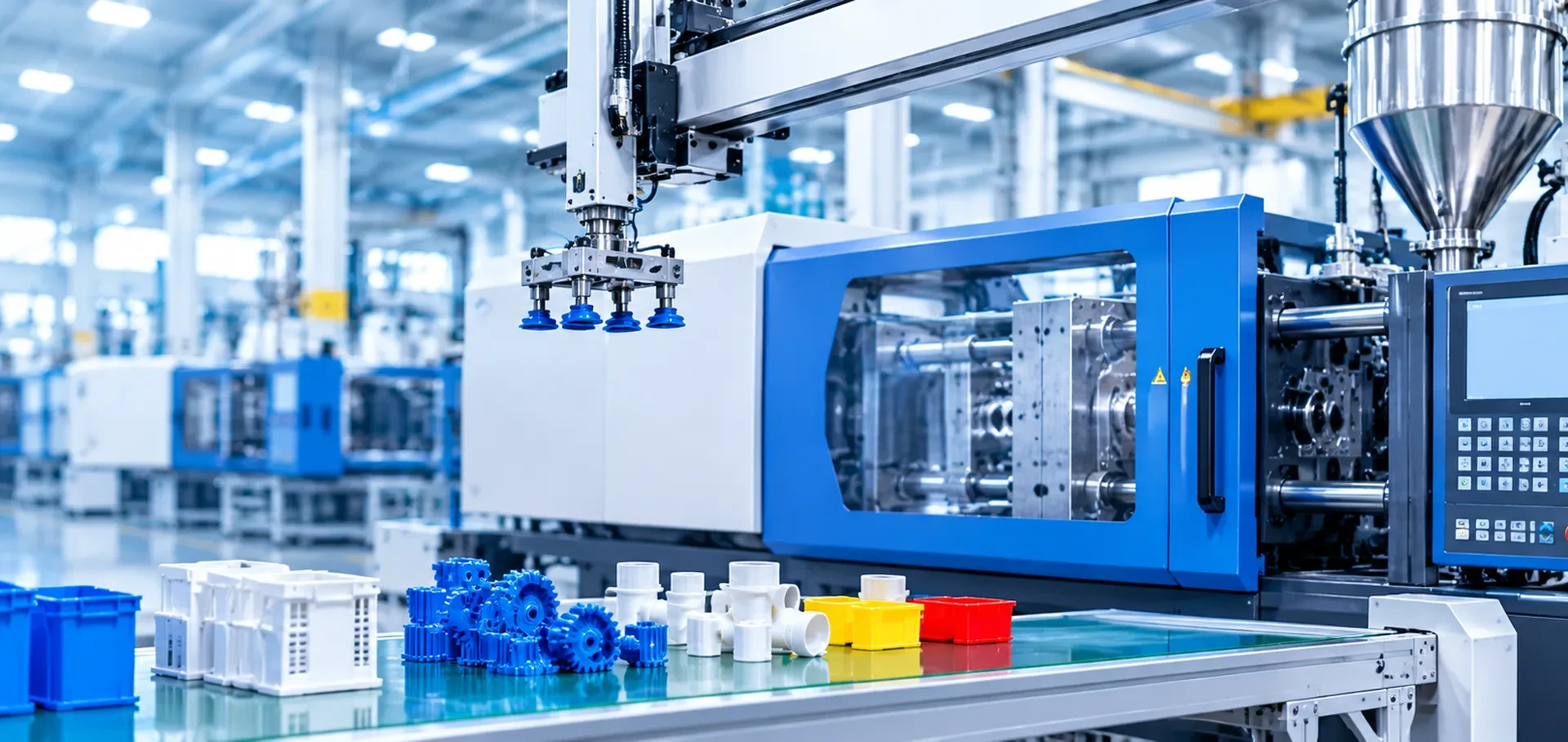
| Automated Molding | Take-out robots remove each part automatically for a consistent cycle and less handling damage. | In production | Take-out robots are fitted to all 8 machines for automatic part removal, which also protects cosmetic surfaces. |
| Overmolding / TPR on PP | GSUN's hand tool pages describe TPR grips molded with PP shells. Adhesion between the two resins depends on the specific grades. | In production | Run as two sequential shots on GSUN's own machines: the substrate is molded first, then the TPR. Adhesion is verified at grade level for each programme. |
| Two-Shot Injection Molding | Two resins injected in one machine cycle using a rotating or index tool. This needs a dedicated two-shot machine. | Sequential or partner | No dedicated two-shot machine is owned. Overmolded parts are produced as two sequential shots; where a true two-shot tool is required, the work is placed with a partner and stated as such. |
Molding envelope
Check these figures before sending a drawing. Shot weight, tie-bar spacing and mold thickness are the values for the largest machine; a transferred mold is checked against the specific machine it will run on.
| Parameter | Value | Why a buyer asks |
|---|---|---|
| Clamping force range | 50 to 210 t across 8 machines: 50 t × 1, 120 t × 1, 160 t × 4, 210 t × 2 | Decides whether the projected area of the part can be held closed. |
| Maximum shot weight | approx. 400 g on the largest machine | Decides whether the part plus runner fits in one shot. |
| Tie-bar spacing | up to 500 × 500 mm (largest machine) | Decides whether an existing mold base physically fits between the tie bars. |
| Mold thickness min / max | 150 to 550 mm (largest machine) | A transferred tool outside this range cannot run without modification. |
| Ejector stroke and force | Deep-draw parts need stroke; stiff parts need force. | |
| Standard achievable tolerance | Set against the drawing, the shrinkage of the resin grade and the measurement datum; not quoted as a single number | Must be expressed against material shrinkage, feature size and datum, not as one blanket figure. |
| Minimum wall thickness qualified | Thin-wall claims are only credible with the resin and part that achieved it. | |
| Maximum part size | No single figure; evaluated per part against mold, resin and projected area | Cannot be derived from platen size alone; depends on tool, resin and projected area. |
From enquiry to production
1 · Enquiry and engineering review
You send end use, material requirement, quantity, target part weight and a CAD or 3D file or a physical sample. We review wall thickness, draft, gate options, shrinkage and machine fit, and reply within 3 business days with what is feasible and what needs changing.
2 · Quotation
Tooling and part price are quoted separately. The tooling quotation includes design, material, trial shots and samples; tax is excluded. Modifications caused by a design change on your side are quoted separately from tool corrections on ours.
3 · Mold design and manufacture
Design review is done in-house on SolidWorks. Full mold design and manufacture, using CNC and EDM, are carried out by partner tool shops chosen by mold type and equipment capability, each of which has passed GSUN's supplier evaluation. Mold flow analysis is run by the partner on request and quoted separately. Mold steel is selected against annual volume and resin, and mold life is stated with its conditions rather than as a single guaranteed number.
4 · Trial shot and sample approval
Trial shots on an existing mold take 3 to 5 days. Samples are measured against the drawing and submitted for your approval. Changes caused by a design revision on your side are quoted separately from tool corrections on ours.
5 · First article and production
First article inspection runs after every mold or material change, followed by in-process patrol inspection and outgoing inspection.
6 · Packing and shipment
Standard packing is PE bag plus outer carton. Custom labels, packing and barcodes are produced to the specification you supply. Prices are quoted on FOB terms.